Master Thesis: The European Space Agency's Future Flagship Mission to Enceladus
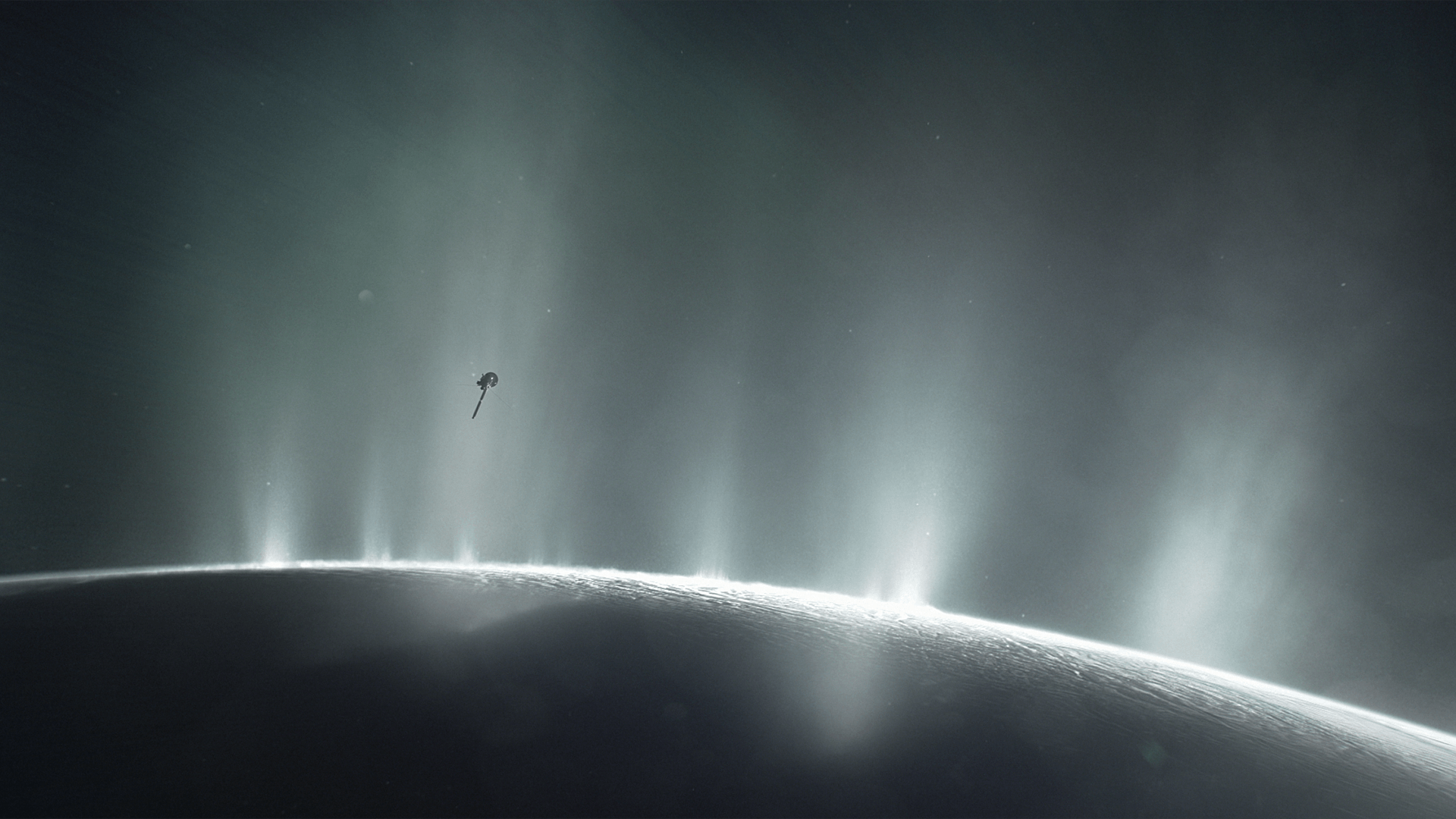
Saturn has long been a favorite within the scientific and public community mainly due to its bright and extensive system of rings. The Saturian rings consist of at least 274 moons, excluding hundreds of moonlets. Naturally, such a large moon system brought about a flag-ship class broad survey mission in the form of the Cassini-Huygens mission, representing a cooperative project between NASA, the European Space Agency (ESA), and the Italian Space Agency (ASI). During the mission’s 13-year exploration of the Saturian system, many revolutionary discoveries have been made, but among its most profound discoveries was the identification of Saturn’s small, icy moon Enceladus as one of the most compelling targets in the search for life beyond Earth. During a close fly-by over Enceladus’ south pole, Cassini’s instruments revealed a series of water vapor plumes and icy particles erupting from a set of parallel fissures, known as ”Tiger Stripes”.
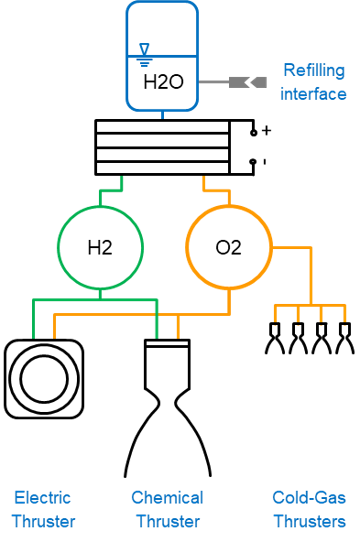
Water Electrolysis Propulsion is one of our main focuses here at the Chair of Space Mobility and Propulsion within the Technical University of Munich. Water electrolysis propulsion makes use of an electrolyser, powered by the energy onboard provided by solar panels, to decompose water into hydrogen and oxygen for combustion in a thruster. While the technology for water electrolysis has been around since the 19th century only very recently has this become of interest for space propulsion applications. Clear advantages are that water is environmentally friendly, extremely storable, and that hydrogen-oxygen combustion provides performances beyond those achievable with propellants currently used for satellite propulsions.
Enceladus is a top target the European Space Agency's #Voyage2050 long-term planning period. No space agency has ever landed on Enceladus. And yet this moon has enormous potential for new science, particularly in the realm of habitability. It checks all the boxes when it comes to conditions for a ‘habitable environment’ to potentially support life as we know it:presence of liquid water, a source of energy and a specific set of chemical elements.
Our plan is to fly through Enceladus' jets and even land on the moon's south polar terrain to collect samples. ISRU will enable water refueling and hence expand the possibilities of such a mission. Water electrolysis propulsion architecture encables a sample return mission, something that was previously considered impractical due to Saturn's deep gravity well.
The impact of such a mission could be enormous for Europe & beyond. The mission would boost European competences in many scientific & technological fields, including in-orbit assembly, operating in extreme environments, landing technologies, and novel scientific instrumentation.
Mission name and Logo are provisional and still subject to finalization.